American, European, Japanese and Korean manufacturers are likely to respond very differently to China’s ambition of conquering global vehicle sales because each starts from very different positions. The comeback probably won’t be one single strategy.
Chinese OEMs are combining battery technology, vertical integration, software, AI, rapid product cycles, aggressive pricing and increasingly sophisticated hybrids. Chinese EV exports keep surging month-on-month and year-on-year, while their domestic market weakened, making international expansion increasingly important.
And there is an alarming and clear-cut speed-to-market difference with Chinese NEV brands capable of design cycles as short as 18 months, versus years for many legacy OEMs. So we reckon that the counterattack from the legacy brands will probably have 7 fronts.
1. Initially, they may stop trying to beat China at China’s game.
Instead of immediately flooding the market with cheap BEVs, many legacy manufacturers might use hybrids as the bridge technology.
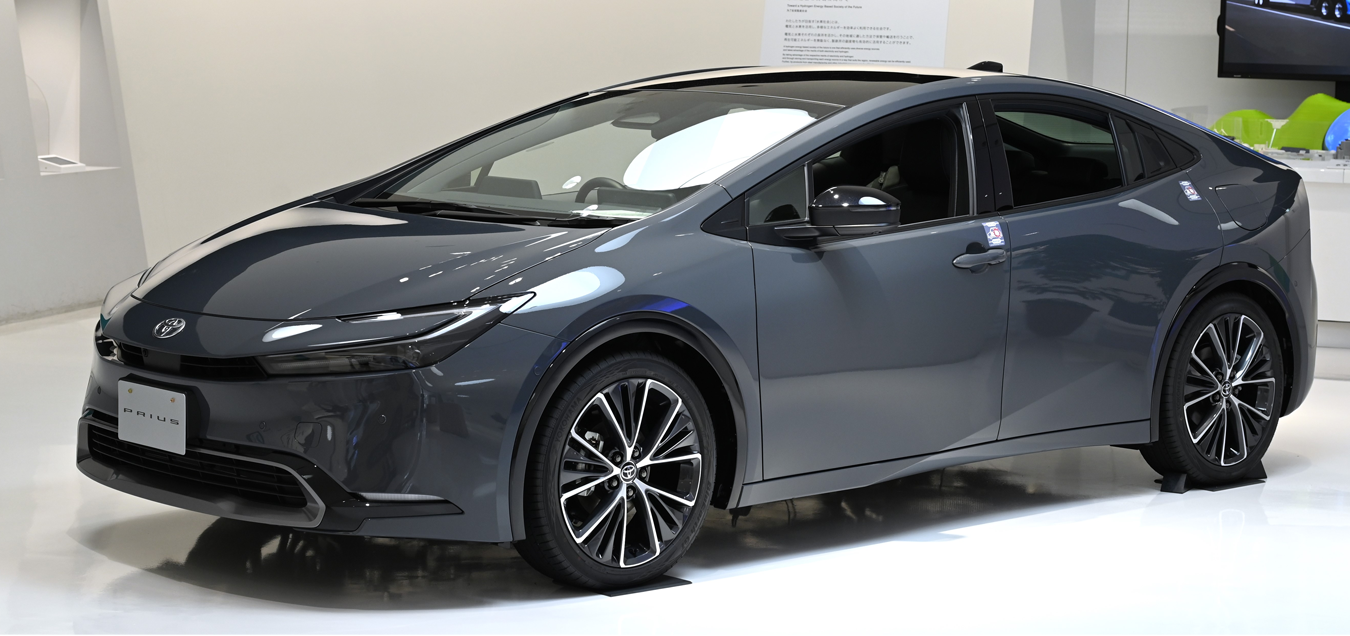
Toyota is particularly well positioned here. And interestingly, Chinese companies such as BYD, Geely and Chery are themselves pushing much harder into HEVs/PHEVs.
Therefore, the next battlefield isn’t necessarily going to be simply internal combustion engines (ICE) to electric vehicles (EV). It will most likely be ICE → HEV → PHEV → EREV → BEV, which will give Japanese, Korean, and European OEMs ample time to catch up on battery and software economics.
2. They will have to fight China with technology over brand heritage alone
The traditional argument of “It’s a Toyota/BMW/Mercedes, therefore people will pay more” is becoming weaker with younger buyers.
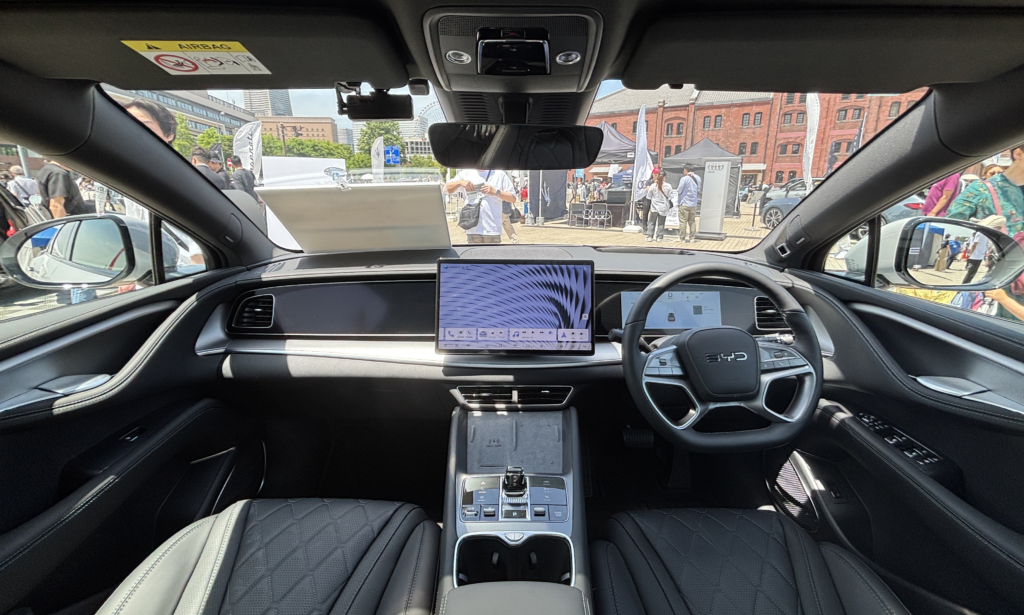
Chinese manufacturers are putting enormous emphasis on screens, connectivity, AI assistants, digital ecosystems and cabin technology. Chinese manufacturers are pushing software-defined vehicles and AI particularly aggressively, which sits very well with tech-savvy younger buyers.
The comeback therefore has to make a BMW feel like a tech product more than a beautifully engineered automobile.
3. They will be compelled to massively shorten product development cycles.
This could be the biggest structural change. The traditional OEM model of 4–7 years to launch and then facelift to the next generation is fundamentally incompatible with a Chinese manufacturer capable of iterating much faster.
Therefore, we should expect it to go from platform to software updates to rapid derivatives and continuous hardware improvement. GM already demonstrates an interesting version of this with its China operation with SAIC that developed the Buick Electra E7, with the resulting technology and platform expected to feed products for other markets. GM has now extended its SAIC partnership for another couple of decades, which sends a strong underlying message of a comeback.
Now this leads to quite a fascinating development, and the future may not be “Western OEM versus Chinese OEM.” It may become Western brand + Chinese technology + Western design/engineering + global distribution.
4. America will probably build a fortress
The American response is likely to be the most protectionist as they have a large manufacturing industry and heritage to protect. Tariffs, connected-car technology restrictions, local manufacturing requirements and supply-chain controls could slow Chinese entry. However, that doesn’t solve the underlying technology problem.
Ford CEO Jim Farley has already warned that Chinese automakers could eventually reach the U.S. despite today’s or future entry barriers, while Ford is developing lower-cost EVs to prepare for that eventual competition.
The danger we see here is that protectionism may give Detroit time without necessarily giving it innovation.
5. Europe will have the toughest fight
Chinese brands have already reached over 15% of Europe’s overall vehicle market and nearly a quarter of its EV market, according to some recent media reports.
Therefore, we expect European OEMs to respond through major cost reductions, cheaper EV platforms, Chinese technology partnerships, European battery production, faster software development, consolidation, fewer models and platforms and greater manufacturing automation.
The uncomfortable possibility is that Europe may have to become more Chinese in the way it builds cars in order to remain European in the way it brands them.
6. Japan will play a different game
Japan may actually have a surprisingly stronger defensive strategy. Toyota, Honda, and others have enormous strengths and experience in hybrids, manufacturing efficiency, proven reliability, established residual values, seasoned dealer networks, reputed aftersales and global supply chains all play a massive role.
Toyota’s hybrid expertise is particularly valuable because the Chinese are now coming after Toyota’s traditional HEV territory as well. Japan therefore doesn’t necessarily need to say.
“We will beat BYD with a $20,000 EV.” Instead, it can say that “We’ll give you 2 litres/100 km, 1,000 km of range and Toyota reliability.” That could be extremely powerful in markets where charging infrastructure isn’t mature.
7. Korea could be the wildcard
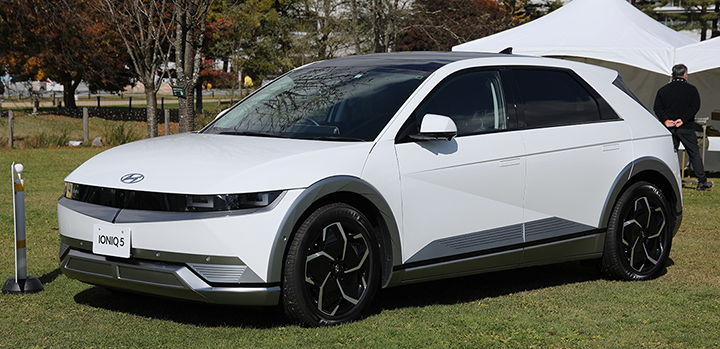
Hyundai and Kia are perhaps better positioned than many Western manufacturers because they already understand EVs, batteries, design, software and value-oriented global products, and Hyundai is showing signs of adapting more aggressively to Chinese technology. Its China-focused Ioniq V, for example, reportedly uses ADAS technology from Chinese autonomous-driving specialist Momenta. That tells us something important: the future winner may not be the company that develops everything itself. Instead, it may be the company that knows what it must own and what it should partner for and who with.
The Middle East difference
This gets especially interesting for the GCC and Middle Eastern market, in which the “comeback” for legacy brands will have to look different. The region could possibly become a multi-fronted battlefield.
The fascinating part in our region is that the dealer network may become the battleground because the consumer doesn’t only buy the vehicle. They buy vehicle brand names associated with prominent dealer groups owned and operated by well-respected families. Those who know how strong loyalties work in this region know that this is not common in other parts of the world. At times, the loyalty to the dealer may be stronger than the OEM brand.
Chinese OEMs are rapidly learning and adapting to this really fast and are appointing some of these reputed and respected dealer groups to infiltrate this important region. A good example would be BYD and Al Futtaim Group.
Legacy OEMs in the region already have built these relationships with dealer groups and will do whatever it takes to protect their territory in terms of dealer networks.
As an example, it is as if you spoke to a car buyer in the past or even today and popped the question on why he or she bought their Toyota in the UAE. A very likely answer would be that they bought it because of the Toyota nameplate as a globally reputed brand; the trust and confidence they have in Al Futtaim Group.
This will also be very similar in the Kingdom of Saudi Arabia with Toyota and Abdul Latif Jameel Motors (ALJ), and also in Kuwait with Chevrolet, GMC, and Honda and Alghanim Industries. There are many more such examples.
Unlike in most other parts of the world, the mega dealer groups in the Middle East have the capability and substantial resources to provide customers with their own dealer financing and payment plans and options. This makes the regional dealer networks even more attractive targets for ambitious Chinese OEMs.
In this region, It’s not purely about the OEM brand name. It’s also about which dealer group or family represents the OEM, as customers here have very strong loyalties and affiliations to these dealer groups and the names behind each of them. This may also be one final weapon the legacy manufacturers may use. Their existing and long-standing dealer network.
Chinese manufacturers can build a fantastic car. But Toyota has decades of customer trust, Mercedes has a premium ecosystem, BMW has enormous brand equity, Hyundai/Kia have established distribution, and regional dealers know how to retain customers for 5–10 years.
So, the next battle may be less about “Who makes the best car?” and more about “Who owns the customer for the next ten years?” That is why the automotive industry’s next disruption will go beyond EV disruption. It is a retail, aftersales, software and customer-ownership disruption.
Having said all that and identifying the renewed positive sentiments, there still remains some level of risk tempering the optimism with ongoing geopolitical uncertainty. While hiring has resumed, many companies still remain somewhat cautious.
In most cases, non-essential recruitment is generally slow or paused, and priority is given strictly to mission-critical leadership roles. The ongoing supply chain disruptions, rising freight costs, raw material inflation, and energy supply challenges are reshaping operational strategies, which makes leaders and resources with proven and strong expertise in supply chain resilience and localisation in high demand.
LinkedIn: Automotivate Middle East
Instagram: @automotivate.me
Facebook: Automotivate ME