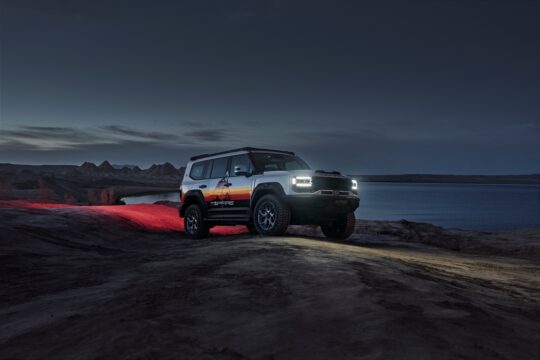
In the Middle East, luxury vehicles are increasingly being transformed into private lounges, executive offices, mobile sanctuaries and highly engineered protection platforms. But what really happens to their value?
For decades, the definition of a luxury automobile was relatively simple. Buy the right badge, choose the right specification and enjoy the experience. Today, that definition is changing.
For an increasingly sophisticated Middle Eastern clientele, the factory specification isn’t limited to just the finished product. The vehicle that leaves the manufacturer’s facility can become merely the starting point for something far more personal.
A luxury SUV can become a private lounge; a large van can become a mobile executive office, or even a sedan can be transformed into a bespoke limousine.
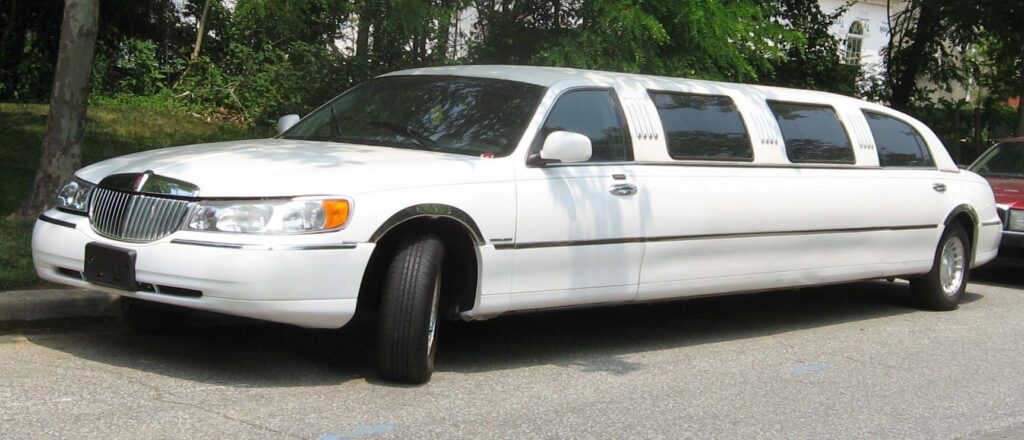
At the highest level, a luxury vehicle can become a highly engineered security platform while retaining the comfort, technology, and refinement expected from a premium automobile.
From mass-produced luxury to personal luxury, even the world’s most expensive automobiles are ultimately produced according to a manufacturer’s production system.
There may be thousands of combinations of colours, materials and options, but the vehicle remains part of a defined product range. Bespoke customisation changes the philosophy.
The customer begins with a platform and then asks: What do I actually need this vehicle to do? For one owner, the answer may be an extraordinary rear passenger environment. While for others it may be privacy, a mobile workspace or for a family, it could be long-distance comfort. For a high-profile individual, security may be the priority.
The vehicle is therefore designed around the customer rather than the customer simply choosing from a catalogue. That is a fundamental shift in the meaning of luxury and the rise of the mobile private space.
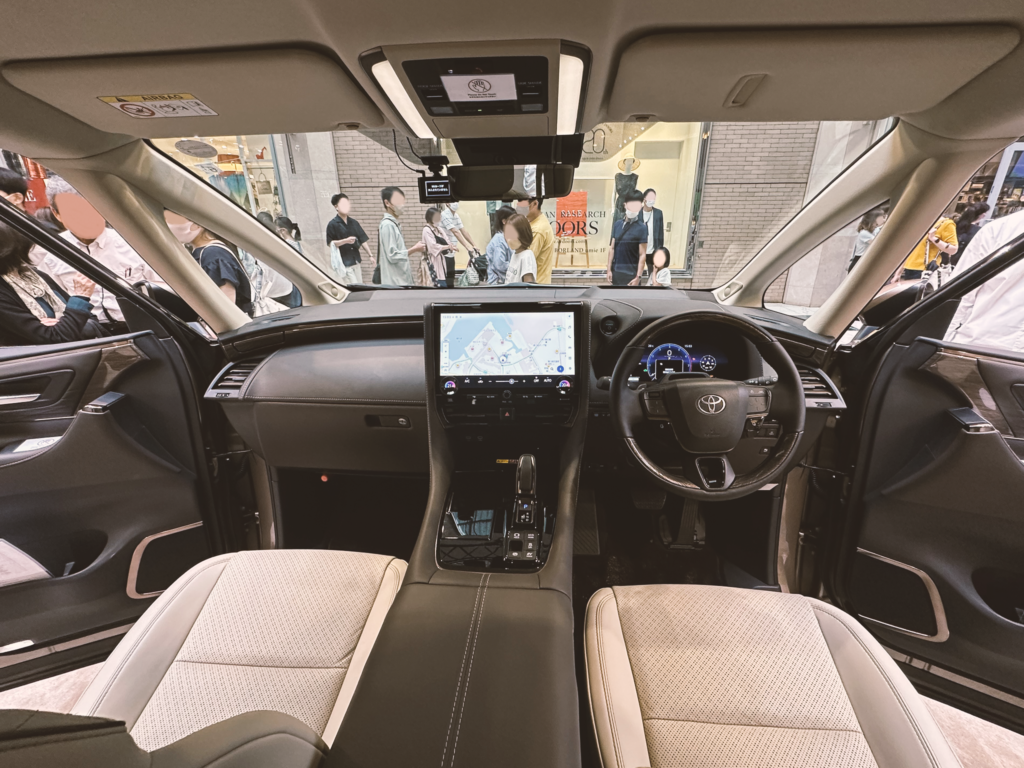
Perhaps nowhere is this transformation more visible than inside the cabin or interior.
Executive seating can replace conventional passenger seats. Privacy partitions can separate the passenger compartment from the driver. Bespoke leather, Alcantara, wood, carbon fibre, metal finishes and hand-crafted detailing can create an environment more comparable to a private lounge than a conventional automobile.
Entertainment systems, high-speed connectivity, wireless charging, refrigerators, tables, ambient lighting and integrated control systems can turn the rear compartment into a fully functional working or relaxation environment.
The objective is now to make the journey itself productive, comfortable or enjoyable and, most importantly, to arrive in style and make a statement.
For business executives, politicians, celebrities and high-net-worth individuals, this can have enormous practical value. An hour spent travelling can become an hour spent working, or a long airport transfer can become private downtime, and even a journey between meetings can become an opportunity to prepare for the next one.
The automobile becomes an extension of the office, home, personality, or lifestyle.
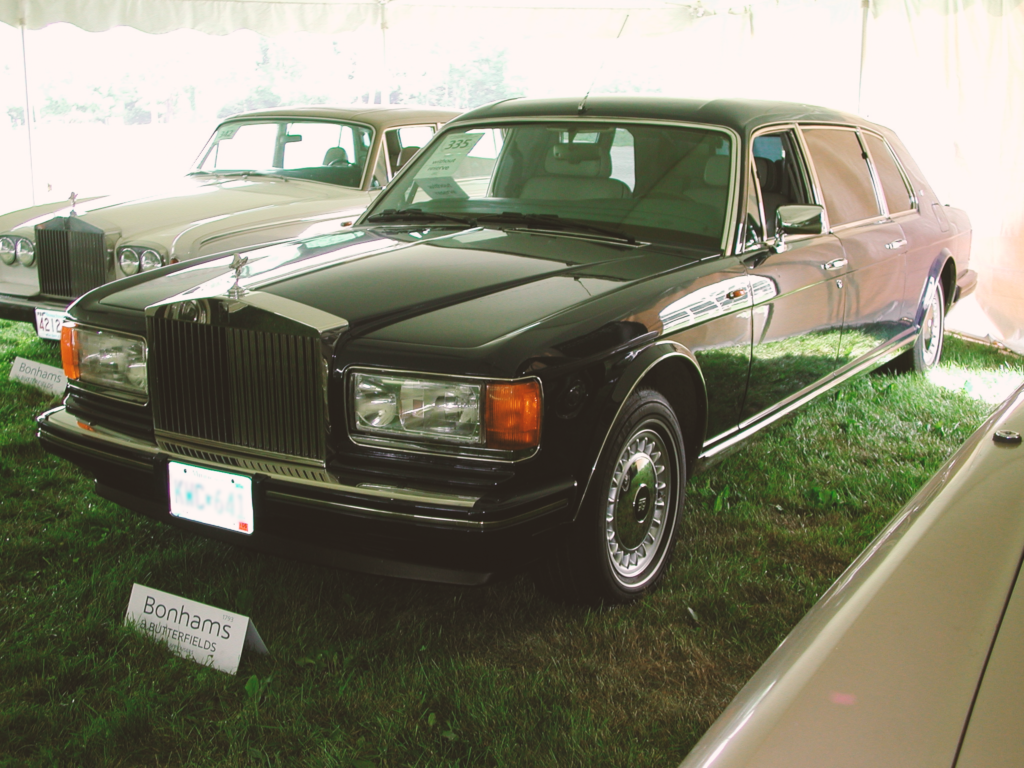
When luxury meets security at the other end of the spectrum is one of the most technically demanding forms of vehicle transformation: armoured and protected transportation when security cannot be compromised at any cost.
The Middle East’s importance as a centre for business, diplomacy, tourism and international events has created demand for vehicles that combine discretion, luxury, and protection.
An armoured vehicle is fundamentally different from simply adding heavier materials to a standard car. Additional weight affects virtually every aspect of the vehicle, including suspension, braking, tyres, power delivery, electrical systems, door mechanisms, glass, cooling and chassis dynamics. Even the way passengers enter and exit the vehicle can require consideration.
The challenge is to integrate protection without destroying the characteristics that made the original vehicle desirable. The finished vehicle therefore needs to deliver two apparently contradictory experiences: maximum protection and minimum intrusion.
From the passenger’s seat, the vehicle should still feel like a luxury automobile, and underneath that luxury, however, is a completely different engineering proposition.
Protection doesn’t have to look intimidating. Modern VIP protection vehicles are increasingly designed around discretion. The objective is often not to make the vehicle look like an armoured vehicle.
In many cases, the ideal protected vehicle should look completely ordinary and discreet.
That creates another dimension of luxury, which is peace of mind without visual compromise.
For the passenger, the vehicle may provide the same leather, climate control, entertainment, and connectivity expected from a premium SUV. The difference is what has been engineered into the vehicle around those features, and this is particularly relevant to the Middle East, where luxury SUVs have become an important part of executive and VIP transportation.
This brings us to the most interesting question: where does the value go? Or does customisation increase the value of a vehicle?
The answer depends on which value we are measuring, or one may even ask the hard question for some. Which is: does a VIP or high net worth individual or business really care about resale value? Some of these clients may rather let the vehicle sit in a warehouse than see someone else driving the vehicle they did previously.
The simplest measure is resale value, but it’s not always the case. Here, the answer is complicated.
A heavily customised vehicle may actually have a smaller pool of potential buyers than a standard factory model.
A buyer who wants a standard luxury SUV may not be willing to pay extra for a highly personalised interior. But that does not mean the customisation has no value. Instead, it means the value has moved from resale value to use value.
A bespoke executive vehicle can save productive time. A luxury conversion can provide an experience unavailable from a standard model, and a specialist touring build can improve comfort over thousands of kilometres.
A protected vehicle can provide a level of security that cannot be measured against the standard showroom price, and a unique interior can create exclusivity that simply cannot be purchased from a conventional options list.
The financial value and the ownership value therefore become two different things.
One can also say that there are the economics of exclusivity which is an interesting principle at work in the luxury market: Scarcity creates value.
A standard luxury SUV may be expensive, but there may be thousands of similar examples on the road. While a professionally transformed vehicle may be one of a handful. Hence, its value is therefore not determined solely by the original manufacturer’s price.
It is also influenced by the quality of the transformation, the reputation of the craftsmen and engineers involved, the materials used, the uniqueness of the specification and the needs of the eventual buyer. This is similar to what happens in other luxury industries.
A bespoke suit does not necessarily have a higher resale value than a ready-made suit, or a customised yacht does not necessarily recover every Dirham spent on personalisation. Even a bespoke residence may be worth less to someone who dislikes its design.
Yet nobody would argue that personalisation has no value, as the owner is purchasing something else which is a product designed specifically for them.
One of the key aspects is the quality and uniqueness of craftsmanship. At this level, customisation becomes less about accessories and more about craftsmanship.
The difference between an ordinary conversion and an exceptional one can be immediately apparent. Leather must be selected and installed with precision, stitching with consistency, correctly fitted panels, electrical systems need to be integrated rather than simply added. Any new technology needs to communicate seamlessly with the original vehicle, and all materials must complement each other.
And perhaps most importantly, the finished vehicle must feel as though it was designed as one coherent product.
The best customisation does not scream “this has been modified.” Instead, it makes you wonder: “Why doesn’t the manufacturer build it like this?” That is the hallmark of successful bespoke automotive design.
The Middle Eastern region is particularly well suited to this industry. With an established culture of luxury and personalisation, a strong preference for premium SUVs and large vehicles, a sophisticated hospitality and VIP transportation sector, and an appreciation for craftsmanship and exclusivity.
There is also a practical dimension: extreme temperatures, long journeys, desert environments and high levels of vehicle ownership create opportunities for specialised solutions that go beyond aesthetics. A vehicle can be customised not simply to look different, but to work differently, and that distinction is important.
The next evolution may be interesting as vehicles become increasingly connected and software-defined; customisation will move beyond leather, lighting, and bodywork.
Cabins will become configurable environments, seats will adapt to individual passengers, entertainment, and connectivity will become personalised. Glass and privacy technologies will become smarter, vehicle systems will increasingly recognise the people inside them, and specialist engineering will allow vehicles to be configured for very specific missions.
The luxury vehicle of the future may therefore be less about owning the most expensive specification and more about owning the right specification for your life.
So, what is a customised car really worth?
Perhaps the wrong question is: “How much will I get back when I sell it?” and a better question would be: “What did the transformation give me while I owned it?”
Did it make the vehicle more comfortable? Or did it make it more useful, private, exclusive, capable, secure or even: Did it create an experience unavailable from a factory vehicle?
If the answer is yes, then the customisation has created value, even if every Dirham spent does not appear on the resale invoice. Because luxury has never been exclusively about financial return. It is about access to something ordinary products cannot provide, and perhaps that is where automotive customisation is heading. Not simply toward making cars different but toward making them personal, purposeful and impossible to replicate.
“The factory builds the automobile. The owner defines what it becomes”.
LinkedIn: Automotivate Middle East
Instagram: @automotivate.me
Facebook: Automotivate ME