For many decades, the Middle East region was a stronghold for both Japanese, European and American motorcycle brands. What kept some of these names firmly in control was everything from their reliability to brand heritage.
Historically, what the automotive industry has taught us is that disruption doesn’t always arrive gradually. Sometimes it explodes into relevance and in your face before you realise what happened.
Early signs suggest that the world of two-wheelers, particularly the Middle East, could be next. It’s already taking place in other regions as we speak. The Middle East is uniquely positioned for this shift, and we believe the market is now ripe and ready for disruption.
There are several factors that seem to drive this change, with a young, price aware population, a massive demand for delivery and last-mile mobility, a rising cost sensitivity even among premium buyers with a growing appetite for mid-capacity leisure bikes.
Historically, this demand has been met by Japanese brands dominating both commuter and performance segments. That said, cracks are slowly but surely beginning to show as prices are steadily climbing and customers are becoming more open to alternatives.
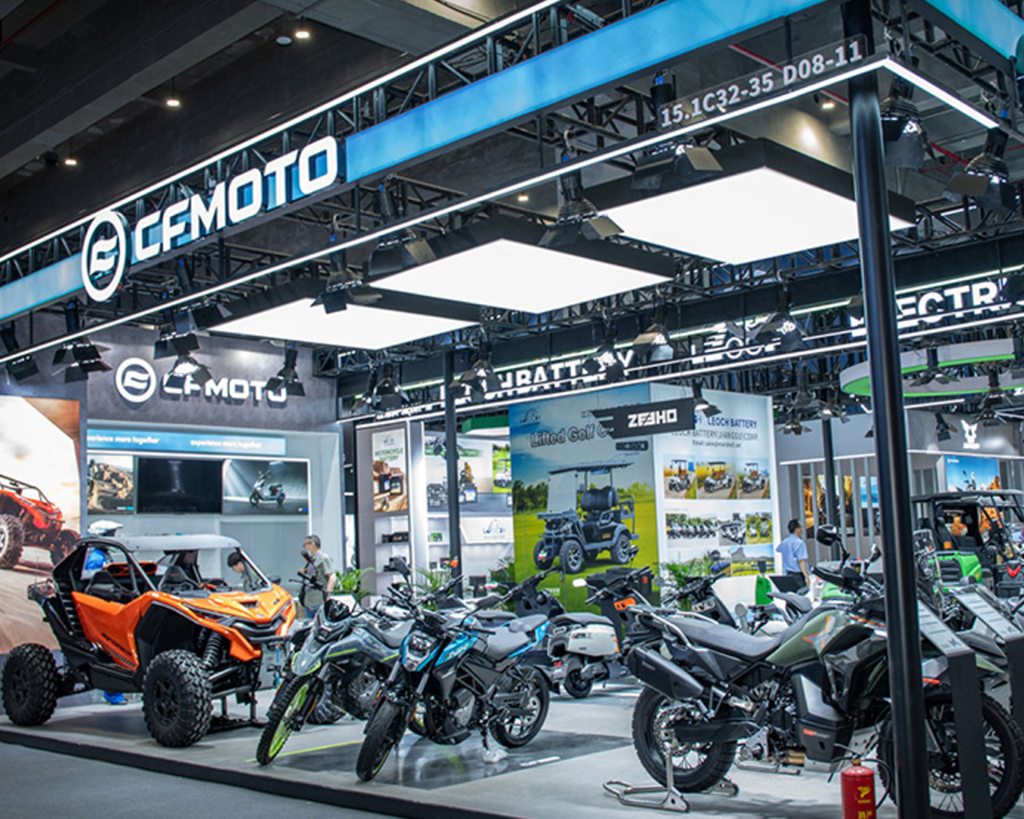
Now, Chinese brands are already entering the conversation. It’s a future trend that might already be underway.
What’s different this time is the quality and positioning of the Chinese brands now entering the conversation. CFMOTO’s technology partnership with KTM, VOGE’s long-term engineering work with BMW Motorrad, and QJMotor’s collaboration with heritage brands like Harley-Davidson on smaller-displacement projects all point to the same shift. It’s clearly no longer the era of the “cheap Chinese bike.”
We reckon the Middle East will accelerate the shift, unlike Europe, where regulation drives change. The Middle East is driven by value and practicality, which plays directly into China’s strengths.
Even premium buyers in regional markets like the UAE are becoming more price-conscious. When a Chinese motorcycle offers 90% of the experience at 60–70% of the price, this equation becomes really hard to ignore.
With the rapid rise of e-commerce and food delivery platforms, demand for durable, cost-effective motorcycles is surging. Indian manufactured motorcycles under early-stage brand licensing from big Japanese brands dominated the delivery segment, Chinese brands with European designs are perfectly positioned to take control of fleet sales, and their electric motorcycles are making a serious challenge.
Non-Chinese traditional OEMs were considered not very flexible and slow in appointing distributors, and the Chinese seem to have identified this opportunity early enough and became faster in appointing their distributor and dealer network, giving them faster regional penetration.
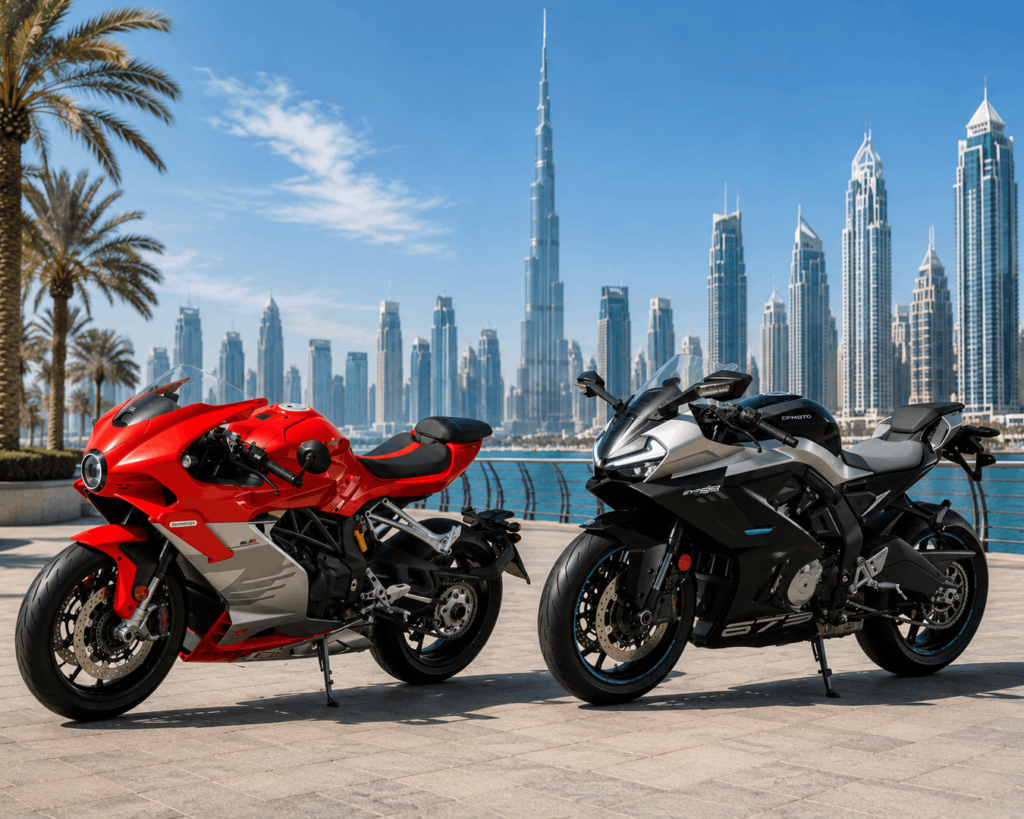
As the Middle East and Africa region demands robust and heat-tolerant machines, early feedback suggests many Chinese models are performing far better than expected in extreme climates.
When the global expansion of BYD began, few legacy car automakers took them seriously. Hence the comparison of what is about to happen to Chinese motorcycles to that “BYD Moment”.
The assumptions the legacy OEMs had were very familiar. It was perceived that Chinese products would remain “budget alternatives” and brand perception would take several decades to evolve, and that technology gaps would persist.
BYD leapfrogged, and motorcycles are now approaching a similar inflexion point.
Our team believes that the shift won’t necessarily start at the top. Rather, it will begin in the mid-capacity 300cc to 700cc segment, the fleet, and commuter space and the value-conscious enthusiast market. From there, it will move upward.
What our regional dealers and distributors should watch out for and be aware is that this is less about “if” and more about “when.”
It is very evident that early adopters in the region are securing distribution rights in key markets and putting great emphasis on after-sales and parts infrastructure, which is the true differentiator.
Unlike many legacy brands, many Chinese automotive brands, both in two and four wheelers, seem to be appointing distributors and dealers faster and on a non-exclusive basis. This means it will make it relatively easier for them to uproot low performing distributors and dealerships and reallocate these to a better performer in a short space of time with fewer complications.
Those who dismissed Chinese cars a decade ago are now playing catch-up, and the same mistake in the motorcycle space could be costly.
The Middle East has always been a market that rewards value, and Chinese motorcycle brands are now aligning perfectly.
They are not here to replace Japanese and European brands overnight. They just need to be good enough, then better and significantly more accessible. That’s exactly how BYD played and changed the game in cars.
And if history is any indication, the next disruption won’t come with a warning. It will arrive. And then suddenly, it will be everywhere.