I might just be holding on to stick shifts and chrome bumpers in a world that has steadily moved towards automatic and plastic. I’m sure that I’m not alone in this either. Even people I know, who very well know and appreciate their drive, remain hesitant about fly-by-wire steering, preferring instead the feedback of a traditional steering column (the kind that lets you viscerally feel every rut and ripple on the road).
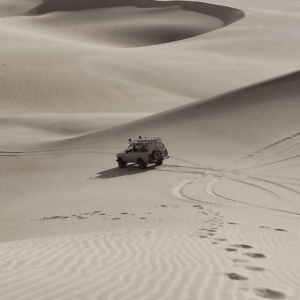
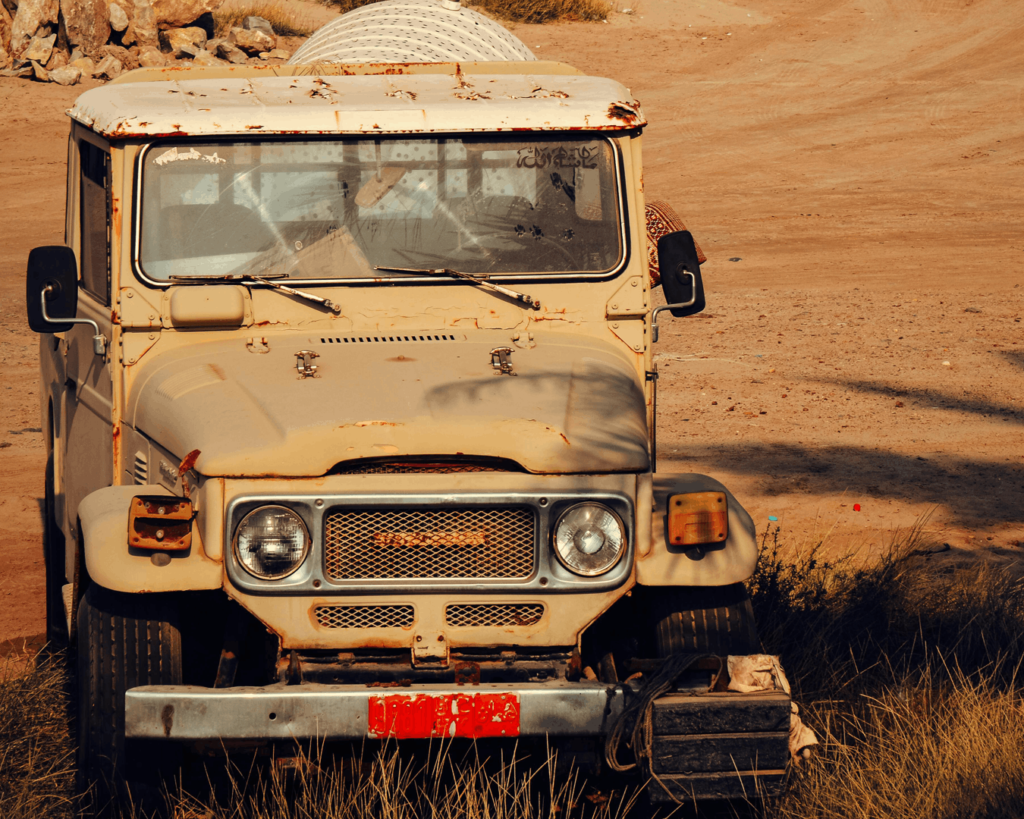
But as others like myself, we can’t exactly be blamed here. We grew up in the 70s and 80s, surrounded by your Land Cruisers, Rovers, or Willys. Some of these even had to be cranked to even get started. I still recall the excruciating pain as a child attempting to help my father crank the vehicle into life, only to get knocked by the shaft on the knee or family jewels. This upbringing took me across some of the most challenging terrain on Earth, be it the remote parts of Africa, the jungles of Asia, the outback of Australia, or the effervescent dunes of the Middle East.

These are the kinds of places that could only dream of the calculated paving in the form of civilised roads. These also happened to be the areas that tested the mettle of any seasoned driver and came to become the foundation of my love for the stick-shift 4×4—culminating in a foray into motor racing and rally. In those days, one could only rely on one’s own hard-won intuition, plus the lessons learned from the school of hard knocks. And with a dash of common sense, you have the toolkit one had to survive with before technology entered the game.
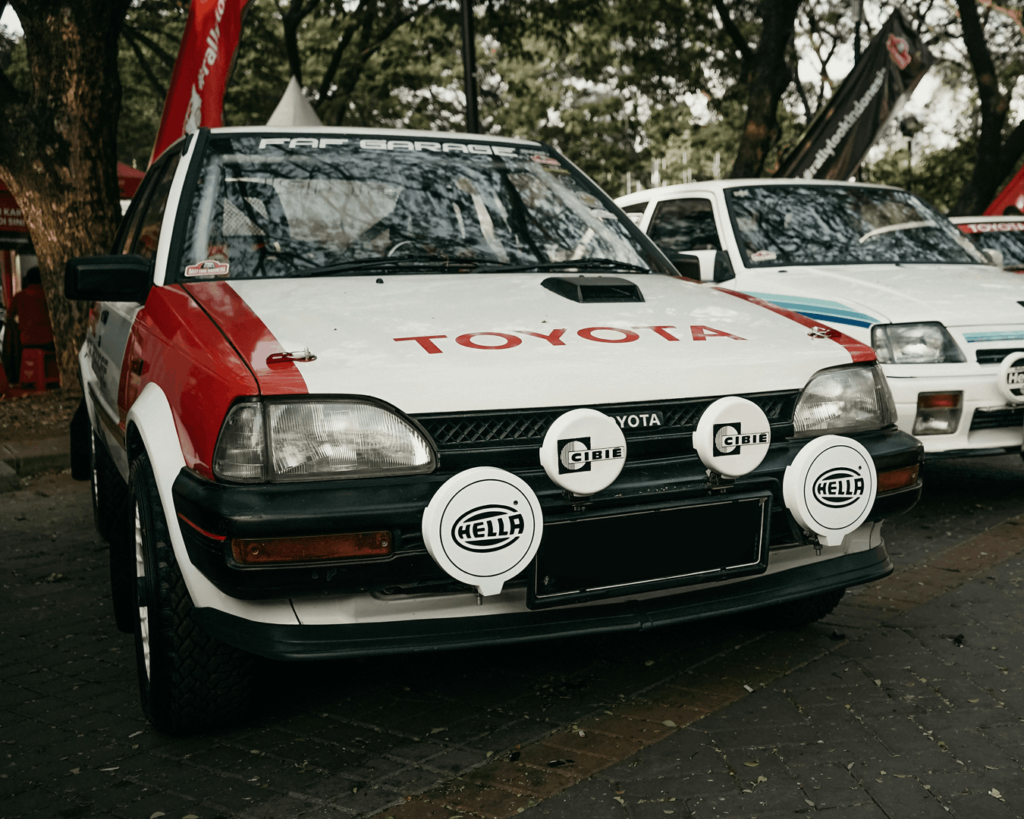
Perhaps life didn’t just boil down to technology after all.
When I was young, I remember the general sentiment when Japanese cars first entered the conversation. At the time there was a strong inclination towards European—or known as at the time, continental—vehicles. They were generally seen as more prestigious, and by extension, trustworthy. Cars from the East, however, despite their growing reliability, were often met with a certain degree of hesitation. And yet, over time, as perceptions evolved, brands like Toyota and Nissan became household names in their own right; essentially becoming crowned by the masses as benchmarks of motorcar engineering.
And just like then, we might just be witnessing a similar boom of comparable magnitude.
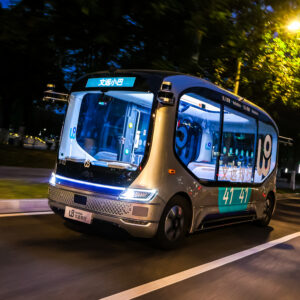
The transition to electric vehicles (EVs), alongside the rise of Chinese manufacturers like BYD or Geely, prompts somewhat familiar questions. Concerns around long-term value echo the same tunes we heard quite a ways back. That being said, even the adoption of EVs themselves start to question the very nature of the energy ecosystem that underpins the cars we’ve all become one with.
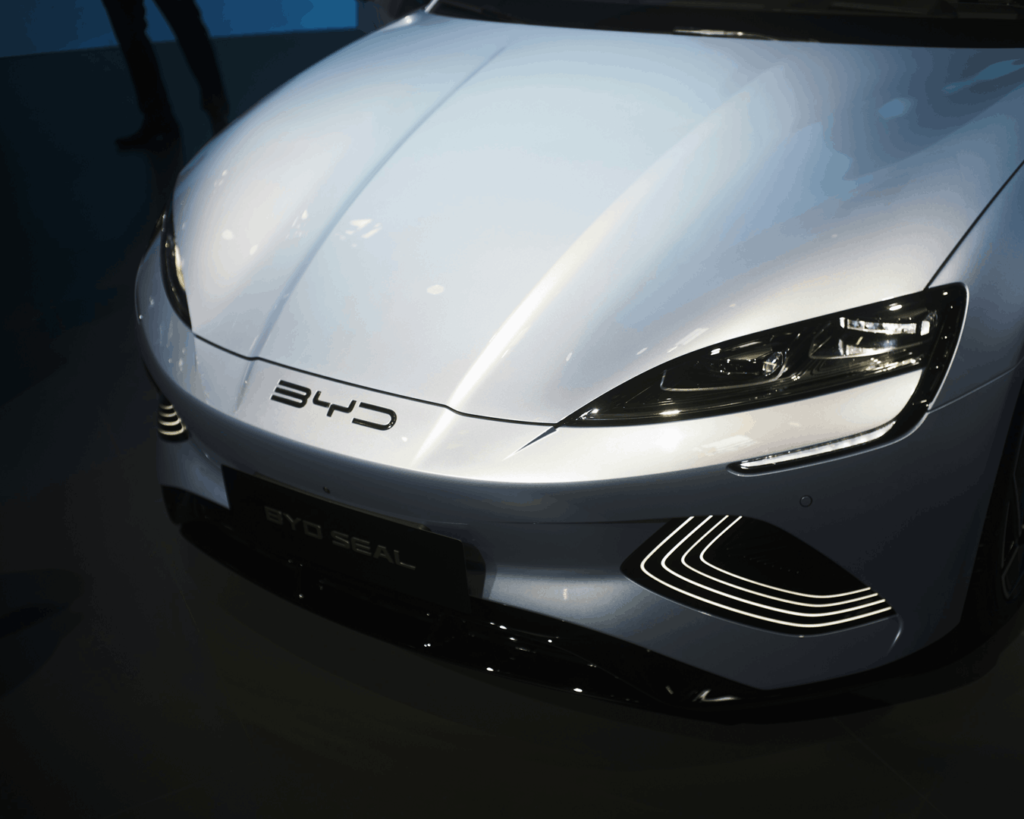
In regions like the Gulf, where energy systems evolve in tandem with ever-more ambitious national strategies, this transition takes on an added dimension. Rather than the wholesale replacement of the traditional engines, EVs come packaged with the promise of diversification net positive; and a future that looks a tad greener.
Yet even so, the very instinctual, human response to change seems to be unchanged at large.
To this day, every transformation in the automotive sphere follows the same rhythm. We start with skepticism to the things that challenge our notions, leading to the curiosity of what could be, to the acceptance of improvement, and ultimately to the normalisation of what was once alien. What feels strange today somehow always becomes the status-quo of tomorrow.
If you ask me, our relationship with the motorcar hasn’t ever been purely technical. For reasons we all perhaps can’t understand, our attachment to cars cuts deep into the emotional parts of our brains. People hang on to the brands they love as if they were dear friends; and when the time comes to make the upgrade, we scrutinise as if it were a multi-billion dollar deal. If they align with our lived experience, brands have the capacity to shape our perceptions without us ever realising it.

Vitaly Gariev via pexels
In a sense, the current moment isn’t exactly new. It might just be a case of history once again repeating itself in a long-running journey of adaptation.
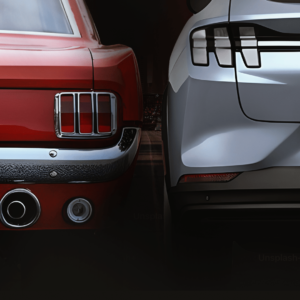
While some might be inclined to believe that EVs and alternative fuel vehicles are disruptions to the norm. One might be inclined just the same to take a step back and witness the fact that these new entrants follow a tradition of innovation spanning the better part of a century.
Because when you really take a hard look at what’s going on, the automobile has never been a stationary object. The wheels have turned, and continue to turn so long as people continue to embrace the new and the unusual.

As for me, for better or worse, I remain steadfast in my leaning towards stick-shift and gas-powered whilst 80s New Wave plays on the stereo. Even as my career in global automotive has taught me to learn and unlearn at a rapid pace, somehow I seem to be resistant to change when it comes to my vehicle and music taste. But, as I see it, this doesn’t mean new tech is a bad thing. It might just be me. It may just be the case that some things in life are easier preached than practiced.