James Watt invented horsepower as a way to sell steam engines, and more than 200 years later his own name became the unit used to describe the power of the electric motors that are replacing those engines.
For generations, horsepower was king. It didn’t matter what your ride was. A family sedan, rugged SUV, sports car or giant American V8. Horsepower was the number and lingo everybody understood. Then the automotive industry started adding electric motors.
And suddenly we have kilowatts, electric motor output, combined system output and enough numbers and technical jargon to make a simple test drive feel like a mathematics exam.
As much as many people believe that EVs are a new technology, history tells us otherwise. EVs aren’t actually new. It’s very tempting to tell the story as petrol cars first, hybrids second and EVs third. But automotive history is rather more complicated.

Electric cars existed in the late 19th and early 20th centuries, alongside steam and petrol-powered vehicles. What we call the modern EV revolution, however, came much later.
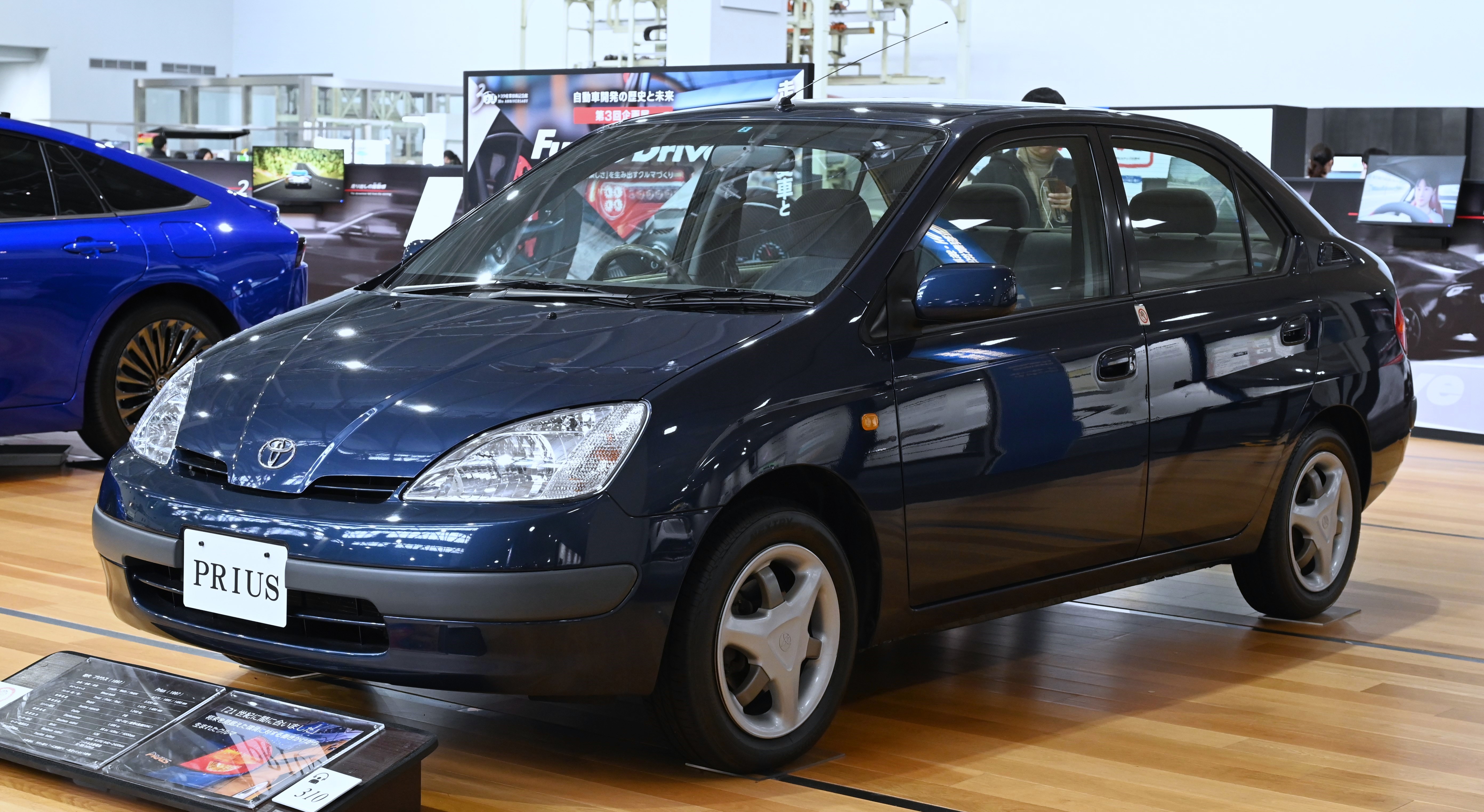
Hybrid technology also became mainstream before today’s mass-market full EV era. The first-generation Toyota Prius, launched in Japan in 1997, became the modern symbol of hybrid motoring.
So, the most understood evolution theory for today’s consumer is:
ICE → Hybrid → Plug-in Hybrid → Full EV
And each step changed the way we think about power.
So, the million-dollar question is, do EVs have horsepower? The answer is absolutely yes.
Horsepower is simply a measurement of power. It doesn’t care whether that power comes from a petrol engine, diesel engine or electric motor.
The difference is that EV manufacturers commonly quote electric motor output in kilowatts (kW).
The conversion is straightforward:
1 kW ≈ 1.34 hp
That means:
100 kW ≈ 134 hp
150 kW ≈ 201 hp
200 kW ≈ 268 hp
300 kW ≈ 402 hp
500 kW ≈ 670 hp
So, when an EV manufacturer says its car has a 300-kW powertrain, we’re basically talking about a car with around 400 horsepower.
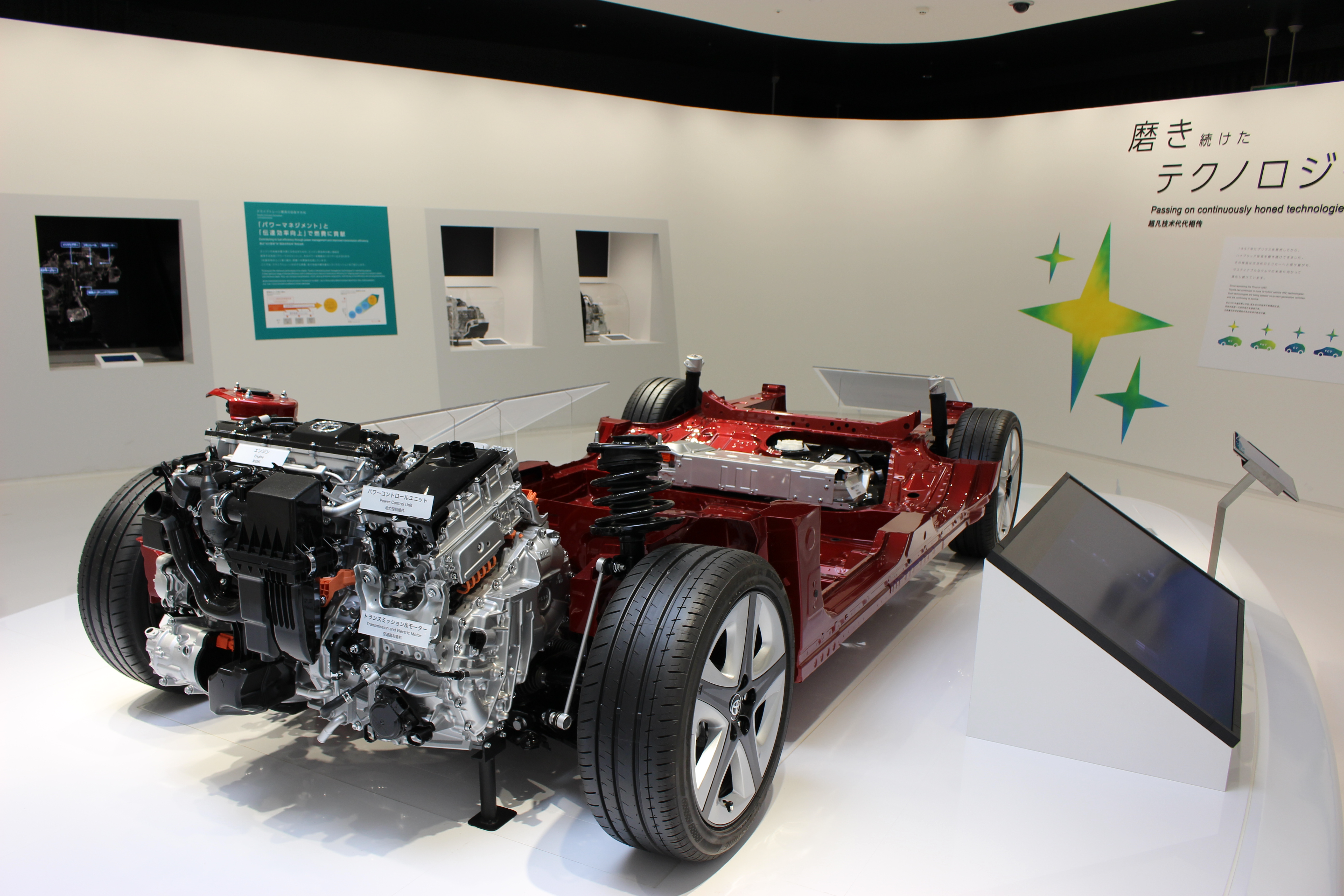
Then hybrids make things interesting with a combination of an internal-combustion engine with one or more electric motors. And now this is where things get confusing for most.
Imagine a hybrid with a petrol engine of 150 hp combined with an electric motor: 100 hp. You might reasonably assume the car has 250 hp. But this isn’t necessarily true because the engine and electric motor don’t always produce their maximum power at exactly the same time. The battery, inverter, motor, transmission, and software also determine how much power can actually be delivered to the wheels.
That’s why manufacturers often quote a combined or system output. And that figure can be significantly lower than simply adding the individual maximum outputs. Think of it as a team, not a mathematical equation.
So, if you imagined that your petrol engine has 150 horses and your electric motor has another 100, and you feel like you just bought an entire stable containing 250 horses, the thing is, some of those horses are running at different times, or aren’t all able to pull at maximum strength simultaneously. You don’t necessarily have 250 horses pulling the car down the road.
It’s the hybrid’s electronic control system that decides when the engine and motor work together, when one takes over and how much power can be delivered. In other words, the important number isn’t always the sum of the parts. It’s what the entire powertrain can actually deliver. Similar to a football team. It’s the team outcome that matters. Each player will have different capacities in performance, and the team manager is like the electronic control unit that decides where each player should be positioned to get the best advantage and result.
When it comes to electric motors, they have a major advantage: they can deliver substantial torque almost instantly due to less lag, which allows the electric motor to fill in the gaps while the petrol engine gets into its most effective operating range.
When at low speeds, the electric motor can provide immediate response, while under hard acceleration, both systems can work together. During deceleration and braking, the motor can act as a generator and recover energy.
This is one reason a hybrid can feel surprisingly quick without needing a huge petrol or diesel engine.
And then came the plug-in hybrid, or PHEV, taking the idea even further.
It generally has a larger battery than a conventional hybrid and can be charged externally. Which means it can drive significant distances using electric power alone before the combustion engine is needed. This offers a halfway house between traditional motoring and full electrification with electric driving for shorter journeys and petrol or diesel power for longer journeys.
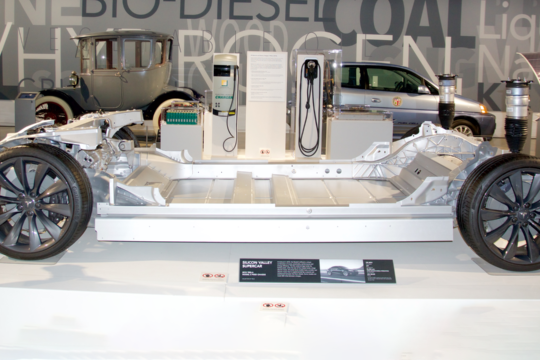
And finally the full EV, the battery-electric vehicle that removes the combustion engine altogether. The powertrain consists of one or more electric motors, a battery pack, an inverter, and a transmission system that is often far simpler than a conventional multi-speed gearbox.
And instead of asking about engine displacement, 1.5 litres, 2.0 litres or 5.0 litres, we’re talking about battery capacity, motor power, charging speed and range.
The language of performance has changed. Horsepower still matters, but it isn’t the whole story. A vehicle’s acceleration depends on much more than peak horsepower. Weight, gearing, traction, torque delivery, aerodynamics, battery capability and software all matter.
This is particularly obvious with EVs; An electric motor can deliver its torque very quickly, producing the immediate acceleration that has become a defining characteristic of electric cars. That means a lower-powered EV can sometimes feel considerably quicker off the line than a similarly rated petrol car.
So, what should you actually look at?
- For a conventional petrol or diesel car: Horsepower + torque + weight + transmission
- For an EV: kW/hp + torque + battery capability + weight + motor configuration
- For a hybrid: Engine output + electric motor output + combined system output + battery + weight
The combined system output is particularly important with hybrids because simply adding the engine and motor’s peak figures can give you a misleading impression.
Our automotive industry’s language is changing.
For decades, we asked: “How many horses?”
Then came hybrids and we started asking:
“How many horses does the engine have, how powerful is the motor and what’s the combined output?”
Now EVs have added another question:
“How many kilowatts?”
The good news is that the maths isn’t difficult.
1 kW is approximately 1.34 hp.
So, the next time someone tells you their EV has 250 kW, you know they’re talking about roughly 335 horsepower. And if someone tells you their hybrid has a 150 hp engine and a 100 hp electric motor, don’t immediately announce that they’ve got 250 hp.
Ask the more important question of “What is the combined system output?”
Because in the modern automotive world, two plus two doesn’t always equal four. And that’s exactly what makes today’s powertrains so interesting.
LinkedIn: Automotivate Middle East
Instagram: @automotivate.me
Facebook: Automotivate ME