How many EVs does a dealer need to replace the after-sales revenue generated by one internal-combustion vehicle?
For many decades, automotive dealerships have been built around a simple formula, which is to sell the car, build the parc, service the parc, and make money from the customer for years after the original sale. However, electrification is silently attacking the third part of that equation.
From a customer perspective, the electric vehicle’s mechanical simplicity can be a major advantage. However, for the dealership, it creates a very different question. Which is, if an EV requires far less routine maintenance, how many EVs does a dealer need to replace the after-sales revenue generated by one internal-combustion vehicle?
There is no universal ratio or benchmark. However, would it be fair to assume an emerging 2–3:1 equation as an industry planning benchmark? We don’t know an accurate answer to this yet, and only time will reveal once enough historical data is available to arrive at a conclusion. At the rate EV sales are growing globally, any data available for benchmarking may become obsolete in no time and can distort any benchmarking exercise or ratios.
So, for the purpose of this discussion, let’s assume that a mature ICE vehicle can potentially generate the recurring after-sales revenue of approximately two to three comparable electric vehicles. Again, this is definitely not a universal ratio, and it varies by vehicle segment, market, mileage, labour rates, parts pricing and ownership patterns, but the direction is clear.
Engine oil and filters, spark plugs, transmission servicing, belts and hoses, cooling system maintenance, exhaust components, engine and fuel system repairs, frequent mechanical repairs, greater labour content. Even potential service upsells will mostly disappear or be substantially reduced with an EV.
EVs still require tyres, brakes, suspension, steering, air-conditioning, 12V systems, accident repairs and periodic inspections. They also introduce new revenue opportunities around high-voltage systems, batteries, electronics, software, and diagnostics. But the frequency and labour intensity of routine maintenance are considerably lower.
All these are from a dealership lens. However, we have not even started evaluating the loss of revenue or potential closure of specialist centres like diesel pump service and repair centres and engine block reboring specialists. These specialists provide services to car dealerships that don’t have their in-house facilities for such work. This remains a topic for another discussion later.
So, getting back to EV’s, the customer will still be there, but the revenue won’t necessarily be the same per customer. This is perhaps the most important distinction. The customer does not disappear when they move from an ICE vehicle to an EV. The revenue attached to that customer drastically changes.
As an illustrative planning model, if an ICE customer generates an annual after-sales revenue index of 100, a mature EV customer might generate somewhere around 35–55, depending on the market and vehicle. The dealer therefore needs substantially more EV customers to generate the same recurring after-sales revenue as they did from ICE vehicles.
EV vehicle unit sales can therefore grow rapidly while after-sales revenue per vehicle declines. A dealer could report record new-vehicle volumes while simultaneously facing pressure on workshop revenue, parts turnover and technician utilisation.
The Labour-Hour Problem
There is another part of the EV after-sales equation that is easy to overlook, which is labour revenue.
The traditional ICE vehicle contains thousands of mechanical components that can be diagnosed, repaired, adjusted, rebuilt and replaced. A technician can spend several hours diagnosing an engine, transmission, cooling or fuel-system problem, stripping components, repairing the fault and reassembling the vehicle. Those hours create billable labour.
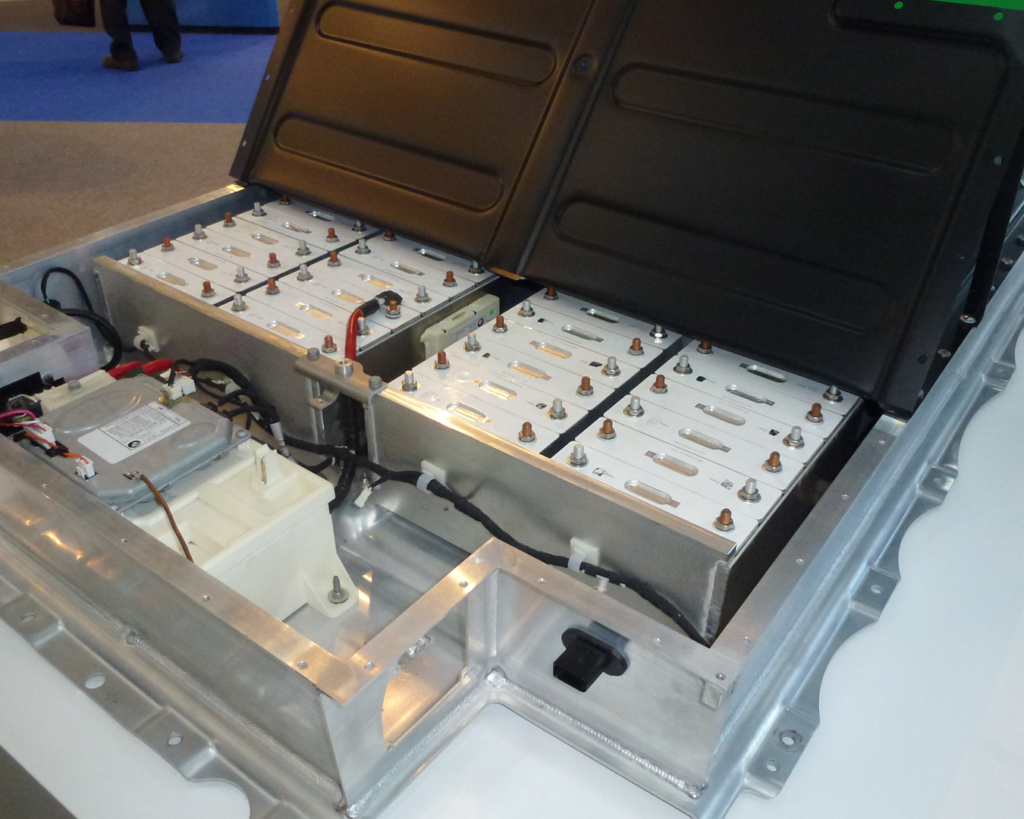
Whilst with an EV, the approach can be very different. A fault may be diagnosed electronically and even in some cases remotely, and the solution may be to replace a complete module or assembly. Instead of repairing a component, the technician may replace an electronic control unit, inverter, on-board charger, DC-DC converter, battery module, electric drive unit or sensor assembly. The replacement component can be expensive, but the dealership’s labour revenue will be significantly lower.
The Repair Vs. Replace Dilemma
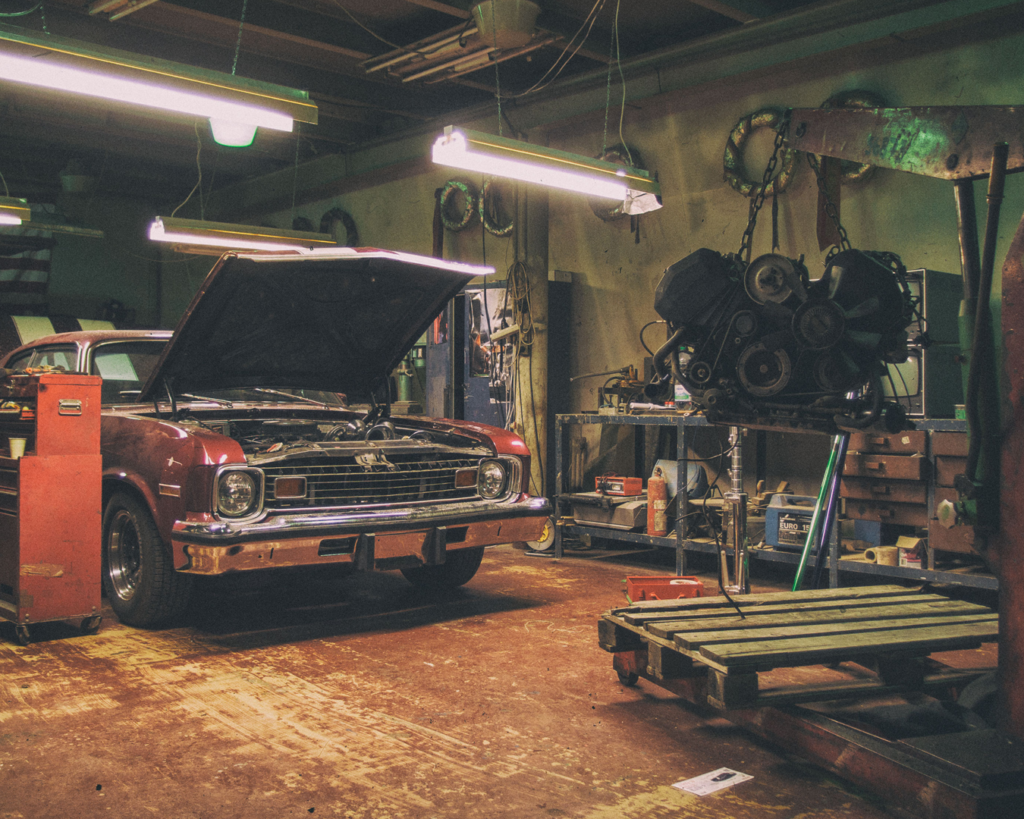
The automotive industry has spent decades developing a repair culture whereby technicians rebuild engines, repair transmissions, replace individual bearings, overhaul fuel systems and spend significant time diagnosing mechanical faults. The EV ecosystem is moving towards a different philosophy, which is to diagnose, isolate, replace, calibrate and release that can be faster for the customer and more predictable for the OEM. But it can also mean fewer technician hours per vehicle. For dealerships whose profitability has traditionally depended heavily on labour absorption, that is a massive structural change. So, replacing is a win for both customer and OEM, but for the dealership the picture is not that rosy.
The Workshop Capacity & Profitability Questions
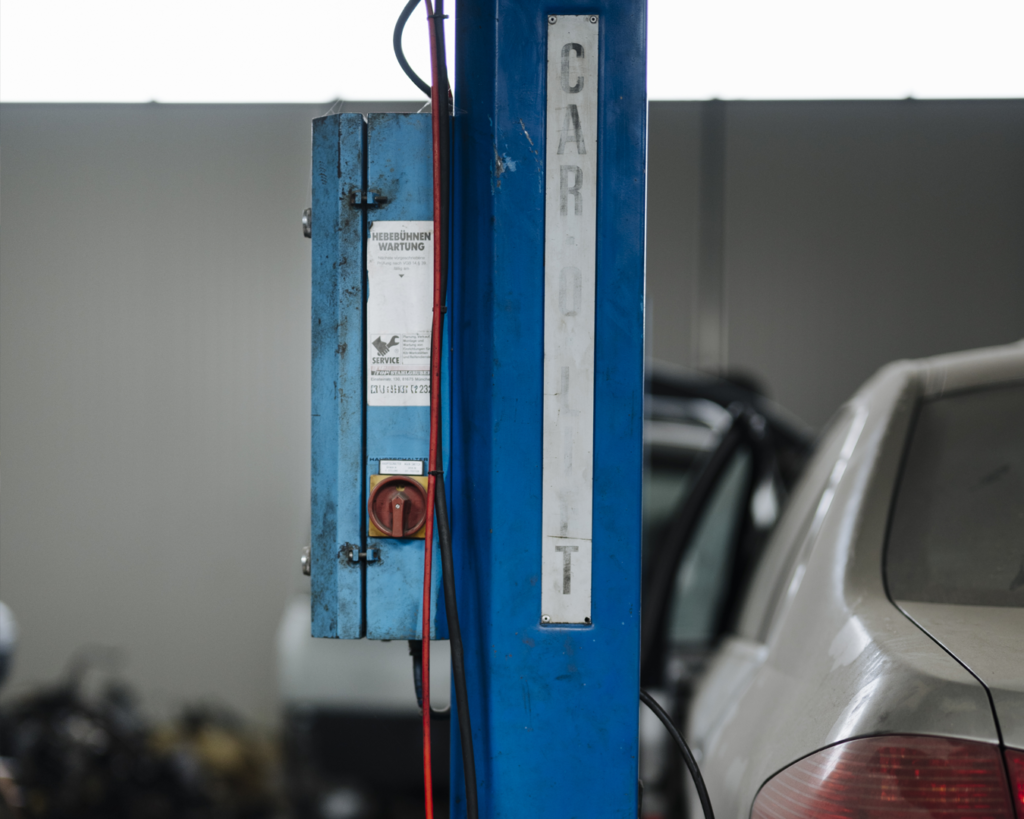
Photo: Shixart1985, via Wikimedia Commons, CC BY 2.0.
If an EV requires fewer labour hours, what happens to all the workshop capacity dealerships have already invested in? We mean capacity in terms of all resources, including massive buildings, holding yards, people, and equipment.
Dealers may need fewer conventional mechanical technicians and more highly skilled diagnostic, electrical, software and high-voltage specialists. But there is a catch. A highly skilled technician may command a higher salary while generating fewer billable hours.
Also, what about the massive CAPEX on land, buildings, and tooling that has already been spent on service centres and facilities modelled around ICE vehicles? The depreciation charged on these CAPEX items based on an ICE vehicle model may now have to be charged to the same P&L that provides much less after-sales profitability with the surge of the EV parc. The traditional workshop productivity and profitability equation therefore changes, and service absorption comes under severe pressure.
For many dealerships, after-sales is not simply another profit centre. Service and parts gross profit helps absorb fixed dealership costs such as rent, salaries, utilities, equipment, management, IT systems, facilities, demonstrator fleets and administrative overhead.
If the workshop and parts operation generates less gross profit per vehicle in the parc, the dealership’s dependence on new-vehicle gross profit increases. This becomes particularly important where vehicle margins are already under severe pressure.
The parts department too faces an equally critical change. An ICE vehicle contains numerous components associated with propulsion and thermal management. An EV has considerably fewer moving components in its drivetrain.
That does not mean EVs do not need parts. It means the parts’ basket changes. High-volume, relatively predictable replacement parts associated with ICE vehicles gradually give way to a more specialised mix involving electronics, sensors, thermal-management systems, battery components and high-voltage equipment.
So, Will Hybrids be the Bridge or Sweet Spot?
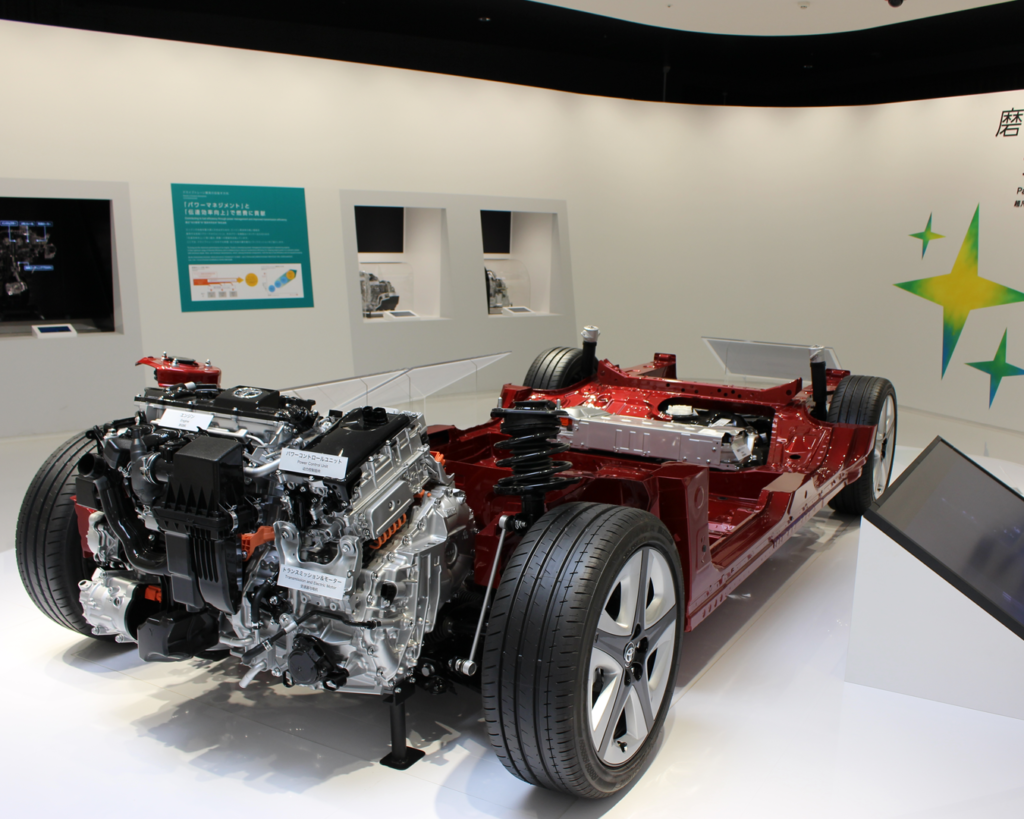
Photo: niconico0, via Wikimedia Commons, CC BY 2.0.
The story becomes even more interesting when hybrids enter the equation. A hybrid still has an internal-combustion engine, fluids and many traditional mechanical components, while electrification and regenerative braking can reduce wear on some systems.
For dealers, the transition is therefore not necessarily ICE to EV. It may be ICE to Hybrid to PHEV and EV, with each step changing the revenue profile of the customer. The real KPI would be after-sales revenue per vehicle in operation, and dealerships will be compelled to measure EV Versus ICE revenue contribution and plan their CAPEX accordingly. They should not allow the EV parc to dilute the P&L built around the ICE parc.
A dealership with 20,000 EVs in its parc is therefore not necessarily economically equivalent to one with 20,000 ICE vehicles. The parc has a different value.
The EV paradox is higher technical complexity but lower repair complexity, but the two statements can coexist. EV systems are technologically sophisticated, yet many faults may be resolved by replacing a sophisticated component rather than spending hours mechanically repairing it.
The Uncomfortable Conclusion
The EV revolution may create a strange situation for automotive retailers. Dealers could sell more vehicles, have more customers and operate larger parc sizes, while generating less traditional after-sales revenue per customer. That does not necessarily mean EVs are bad for dealerships. It means the dealership business model has to evolve.
As for dealership owners, it may be time to use separate yardsticks to measure the performance of your after-sales leader and team. It will not be appropriate to measure their performance and bottom line contribution to the P&L based on a growing EV car parc that feeds into targets modelled around the traditional ICE car parc.
The winners here will be the dealers who understand what replaces the revenue that used to come from the engine, oil, filters, transmission and mechanical complexity of the ICE vehicle. Because the biggest disruption caused by the EV happens first in the workshop.
LinkedIn: Automotivate Middle East
Instagram: @automotivate.me
Facebook: Automotivate ME